The story of a West Virginia girl who missed her moment, survived the silence, and found her smile.
Trigger Warning:This essay contains references to childhood sexual abuse, reproductive health, and survival. Please take care while reading.
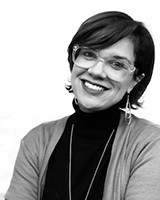
At 50 years old, I got braces.
To reshape something as simple — and as complicated — as my smile.
I’d held on to my crooked teeth for decades. Maybe I didn’t think I deserved to fix them. Maybe they reminded me of the day I was told I couldn’t get braces, and the day I missed my chance to be on The Oprah Winfrey Show.
That memory came rushing back after I read a recent People magazine article and Instagram post about actress Leslie Bibb. She had won Oprah’s national modeling contest in 1990 — the same contest I was almost in. Naomi Campbell, Linda Evangelista, and Iman were the judges. Bibb was 16. Oprah’s show launched her career, took her to New York, and changed her life.
That could’ve been me.
I was 13. A girl from small-town West Virginia newly signed to Elite Model Management. I had already worked for Calvin Klein and Ralph Lauren. I spent my 12-year-old summer in New York dreaming of escape — from my small town and the house I didn’t feel safe in.
Then Oprah called.
Her team had seen my photos and wanted me to participate in the contest. This was before America’s Next Top Model — when Oprah was the gatekeeper.
But I never made it.
That morning, I came downstairs to leave for school and saw my stepfather — masterbating on the sofa, again. A pattern that had started when I was five that evolved into rape and the abuse of my friends and cousins. He was white and also entertained many racist friends in tandem with the abuse. My mother knew. There had been church. Counseling. “Forgiveness.” But nothing changed.
That morning, something in me snapped. I walked out the door for school, walked past my school, and just kept walking.
I wandered the neighborhood, angry and hollow. I scratched my mother’s name into an electrical box on the train tracks: I HATE SUSAN*
Not my stepfather’s name — but hers. I blamed her for not protecting me.
When she found me that evening, she told me Oprah’s team had called. She said that because I’d “skipped school,” she canceled the orthodontist appointment my agency had suggested. I wouldn’t be going to Chicago. I would not be getting braces.
I tried to explain. She wasn’t hearing it.
I was devastated on many levels. But I keep dreaming of modeling, and I knew it was my ticket out.
As a tall brown teenager in a primarily white town, I was used to standing out. That gave me some confidence. Modeling agents always asked, “What are you? — “mulatto.” I didn’t know what that word meant; it sounded like a disease, so I said NO!
I didn’t yet know how to claim myself or check others.
In the basement of my house, away from the violence upstairs, I watched The Oprah Winfrey Show every day at 4:00. That was my safe place. I remember the day Oprah shared that she, too, had been sexually abused. That moment gave me language, relief, and there she was —a Black woman, strong, bright, and beautiful.
At 15, everything exploded. My mother sent me away to Florida to live with her father. His one rule: “Don’t tell anyone you’re Black. You can say you’re Eskimo, Indian, even Chinese — just not Black.”
It’s absurd now to think of those conditions. That my Grandfather had no compassion for the abuse I was escaping, and instead centered racism in his rules.
I once wrote in a poem: I’m light-bright, but never white.
Later that year of my 15-year-old life, I was sent to live with my biological father. A man I had never met — at least in my memory. Money was tight. Some nights there was no power, but it was the first time I met my people, my family, and Blackness that didn’t ask me to shrink. My father embraced me. Loved me. That changed everything.
Later, I returned to my mother’s house. She had divorced my stepfather, and I moved back to help her raise my younger half-sisters. It was still complicated, but quieter. I was different. Older at 16. I had learned to hold pain in my body.
That’s when I met my boyfriend.
He was kind. Steady. Older. And my whole family liked him — my Black family.
We fell in love the way teenagers do when they finally feel safe enough to trust someone. When I found out I was pregnant at 16, I knew without hesitation: I wasn’t going to have the baby.
I had dreams. I wanted a different life. I wanted my life. I knew a child needed to be wanted and born to parents who had skills and resources. I knew this because I could see the flaws in most adults around me, and the weight of being born to a teenager myself.
But in West Virginia, a minor couldn’t access an abortion without a parent’s consent — or a judge’s approval. I knew I couldn’t go to my mother.
The trust wasn’t there. And, she had crossed out the word abortion in the puberty book she gave me. I didn’t trust what she might do. And I feared what could happen to my boyfriend. He was Black. I was underage. My mother was white. The racial dynamics were dangerous, and I had lived that danger.
I had seen what whiteness could wield.
My white grandfather, her father, once had a boy arrested for simply talking to me at school. A Black boy and an honor student on his way to Morehouse College.
I skipped school and went to see the judge to plead my case with my intelligence.
Alone. I stood before a judge and told him who I was: Vice President of my class. A 3.8 GPA. A professional model. I worked at a local department store and pizza shop. I had college plans.
I said: “Your Honor, I have a future. I want an abortion.”
He said yes.
That signature — a white man’s approval on a piece of paper — marked the first time the system protected me.
No one asked me about the violence I had endured, the fear I carried, or the siblings I worried about — still going on weekend visits with my abuser, their father.
I carried all of that in silence.
Until I met Dr. Meera Shah in my 40s.
She was the first person I ever told my Oprah story to. She invited me to contribute to her book, You’re the Only One I’ve Told: The Stories Behind Abortion. I shared my truth — anonymously, under the name Vandalia. Vandalia was the name West Virginia almost had. A name full of potential. A name that, for me, represented the girl I could’ve been, had I been believed and protected.
Meera writes about how, once she began speaking openly as an abortion provider, people began to share their stories with her, always with the same phrase: You’re the only one I’ve told.
When Supreme Court Judge Amy Coney Barrett was nominated to the Supreme Court, I testified against her appointment before the U.S. Senate. Not as Vandalia — but as Crystal Good. A name I had made my own — no longer my stepfather’s, but my legacy.
I called my mother before the hearing. I told her what I was going to say. She said: “It’s your story to tell.”
And it was – it is.
Still, I took great care. I didn’t want to shame her. As I’ve aged, the “hate” has faded, and I wonder more about her life, her trauma, and the cruelty my stepfather inflicted on her.
When Senator Corey Booker asked me about our relationship, I said it was strained, but I loved her. I’m glad that is on the record, just like the rest of my story.
Even now, I crave my mother. I crave what was lost. I still want to protect her.
We have barely spoken since that hearing. I’m left to treasure the annual small touch of her birthday text.
My mother’s choices remind me of what I want people to understand — how easy it is to look away. How dangerous silence can be.
That’s why I testified.
It’s why I keep telling my story.
Because some girls (boys) can’t get permission.
Because some girls (boys) are not safe.
Because sometimes, the people meant to protect you are the ones causing harm.
They confirmed Supreme Court Judge Amy Coney Barrett anyway.
And now, abortion is illegal in West Virginia — and across much of America.
What allowed me to have something more of a normal young adulthood — access to health care, abortion, is gone. That narrow door I slipped through? Closed. Locked.
And still, I tell.
My life has been one of telling: I shared my happening abuse with my school counselors, my family doctor, so many adults who never acted, and still I truly believe tell until someone listens — someone will listen, that’s what Oprah taught me. I have lived by that, and in the most desperate moments of my life, someone has.
I’ve found a listening ear. I’ve been believed.
I’ve used my story to help pass Erin Merryn’s Law in West Virginia — legislation that ensures all school personnel are trained to recognize, respond to, and report child sexual abuse.
It seems silly that you would have to educate adults that if they suspect child abuse or a child discloses abuse, you are mandated to report it, but this is our society.
That’s why I keep telling.
Because silence protects abusers.
Because the same committee that heard my testimony confirmed Amy Coney Barrett anyway. Because I know somebody is listening.
Now, at 50, I wear braces.
And when I smile, I see it all —
The pain, the truth, the fight.
It’s never too late —
To fix your smile.
To tell your truth.
Photo by Cassandre Boyer on Unsplash