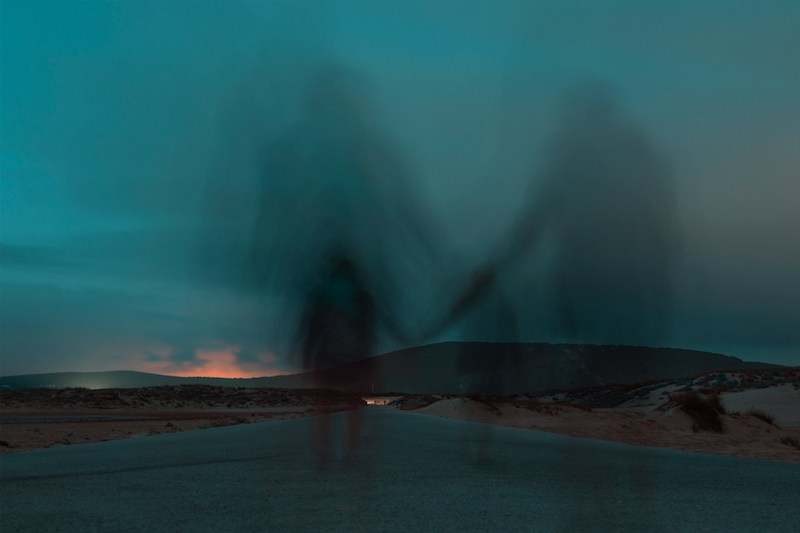
When we talk about grief, people often imagine it arrives like a thunderclap in the very moment a loved one dies, followed by an immediate aftermath and the early tears. But for many of us who’ve lived it, grief isn’t loud. Sometimes it simmers quietly for years, showing up as anxiety, guilt, numbness, or bone-deep exhaustion that makes even ordinary tasks feel heavy. And sometimes it disguises itself as magical thinking and the desperate hope that someone or something can rescue us from ourselves. It’s a passive form of healing.
In 2011, I lost my eldest son to suicide. A year later, my father died. Another year took my mother.
For years afterward, I avoided thinking about the losses because the pain felt too large to face directly. When it came to my son, I could not write about him. I blamed myself in ways that were both rational and irrational. People often say that grief comes in waves, but my experience felt more like a slow, silent flood that rose gradually until it became the landscape of my daily life. I learned how to function while underwater. While I showed up, smiled, and fulfilled my responsibilities, I carried questions that had no answers and a guilt that never loosened its grip.
What unsettled me most was not only the loss itself, but the belief that I did not deserve happiness and no longer had the right to dream for myself.
For eight years, I lived without the ability to write about him, and it was only then that writing became the first place where I could begin to breathe again. I returned to poetry, pouring confusion and ache over my son into lines that did not require explanations or resolutions. I found my way back to the poetry community, where I was surrounded by people who understood that creating something from pain was not indulgent, but necessary. Without realizing it, I began to reenter the world not as someone who had escaped grief, but as someone learning to live alongside it.
Eventually, those emotions found their way into fiction.
I created Serenity, a woman who had spent years suppressing her grief and anxiety while convincing herself that she could outrun both. She moves to a remote island, drawn by a mystery and the fragile hope that starting over in a new place might also allow her to start over within herself. She becomes obsessed with love letters written by a stranger, and she constructs fantasies about who he might be, as though finding him could help her recover the parts of herself she believed were lost.
As she discovers, reality rarely conforms to the stories we tell ourselves in order to survive.
The island offers her a crumbling cottage, complicated neighbors, and relationships that challenge her expectations and her defenses. The man she seeks does not match the version she created in her imagination, and she begins to understand that healing does not arrive as a dramatic transformation, but through smaller, quieter moments that accumulate over time. She experiences connection in the kindness of an elderly neighbor who brings ice cream and crossword puzzles, in the generosity of an adolescent boy who leaves wooden carvings on her porch, and in the unexpected comfort of friendships that develop when she allows herself to be seen as she truly is.
Writing Serenity’s story allowed me to explore what I was not yet ready to say outright, which was that healing does not come from being rescued, but from allowing yourself to remain present long enough for something new to grow in the space grief once occupied entirely.
For a long time, I believed that loving again would mean betraying what I had lost, and I feared that moving forward would require leaving my son behind. However, grief does not erase love, and love does not replace what came before. Instead, the heart expands in ways that make room for both absence and presence, allowing memory and possibility to coexist.
Although you never stop missing the person you lost, you can rediscover parts of yourself that grief had obscured. You can find yourself laughing without immediately bracing for sorrow, forming new connections, and creating meaning from experiences that once felt empty. You can allow joy to return without believing it diminishes the depth of your loss.
You can love again after losing everything, not because the loss disappears, but because you allowed yourself to stay present long enough for life to find you again.

Your words took my mind to a place where grief shows up as a heavy, hooded cape, smothering in summer and affording no warmth in winter. I am saddened to learn that the aftermath of suicide has touched your life.
I’m honored to share this essay here. Writing helped me survive grief; fiction helped me imagine joy again. Thank you for publishing this piece.
It is true that poetry – and perhaps all writing, comes from, as Wordsworth told us, “powerful feelings recollected in tranquility.” I can’t thank Linda Sienkiewicz enough for, to me, the most beautifully written expression of the process of grief. Every journey through grief is personal, and often so private that it is painfully private. What Sienkiewicz has done is allowed the personal to express the universal. Turning grief into art not only, I’m guessing, helped her move forward. Her statement: “I feared that moving forward would require leaving my son behind” strikes me so powerfully. It is not unusual to feel this way but it is unusual to be able to say it out loud. Bless her for this essay.